
The History of Redhill Aerodrome
History

In 1933 the Minister of Health allowed development of an aerodrome at what was Hamme Farm and Redhill Aerodrome was officially opened the same year. The aerodrome commenced operations in 1934 to accommodate the original Redhill Flying Club. The airfield came into use in the 1930’s for private flying and Imperial Airways started to use it as an alternate to the then London airport at Croydon. The first hangar to be built, which remains today "Hangar 9" was also added in 1934. The roof having lasted for 92 years was only recently replaced in November 2025.
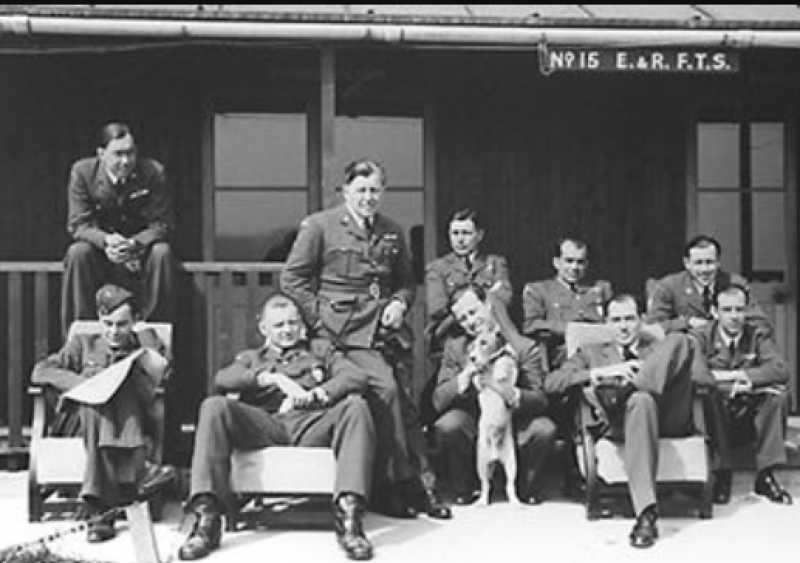
1937 saw the RAF Volunteer Reserve (RAFVR) establish a training school at Redhill, which was operated intensively up to and during the Second World War. No. 15 Elementary and Reserve Flying Training School RAF was formed at Redhill on 1 July 1937. Training continued at the start of the Second World War. The school was renamed to the No. 15 Elementary Flying Training School RAF on 3 September 1939. The first aircraft allocated were a few tired DH 60 Gipsy Moths and later two Hawker Harts were added to the Squadron, finally being replaced by Miles Magisters sometime in 1938. The Squadron had amassed 28 Magisters, 15 Hart variants, 4 Fairy Battles and 3 Avro Ansons. The Fairey Battle was also flown particularly for use with the Polish Grading and Testing Flight which was formed here on 14 March 1940. Each Pilot flew 10 hours in Magisters and 15 hours in Battles.
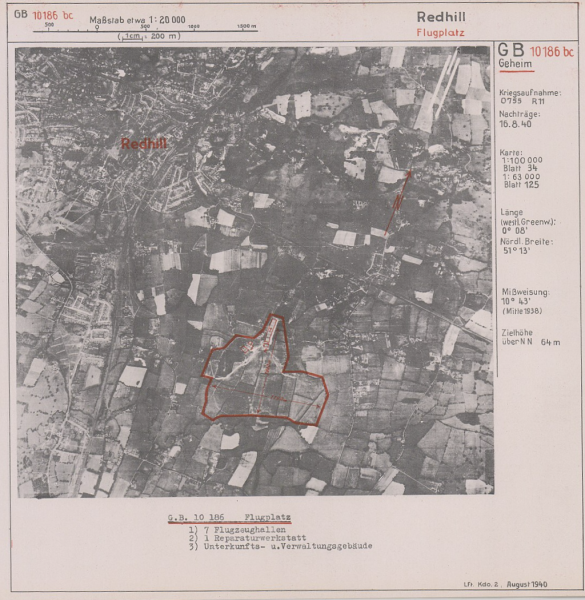
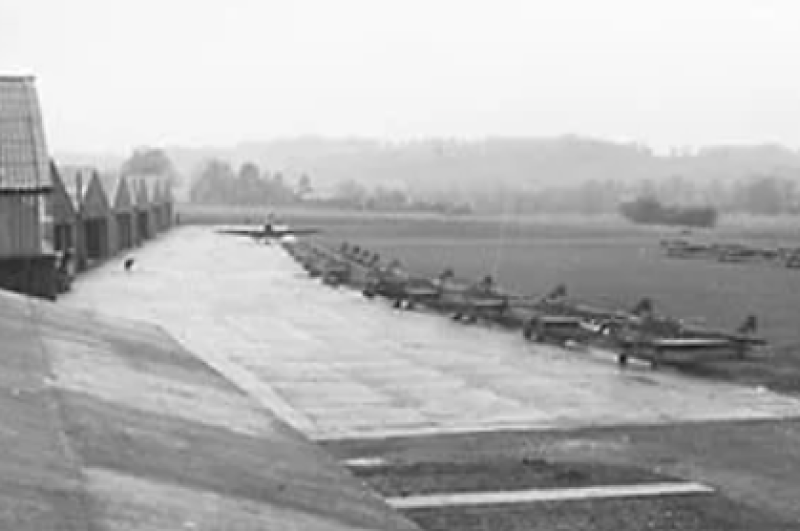
When war finally broke out in September 1939 the Squadrons aircraft were ferried out but returned to resume training at Redhill between 11th September and 6th November 1939. Towards the end of May 1940, the skies over southern England began to darken as aerial activity grew at a steady rate. After the Dunkirk evacuation of the B.E.F. from France and with the threat of a German attack on the airfield the Flying Training School moved to northern England in June 1940. With the withdrawal of the Flying Training School the airfield became an operational RAF station. During the Second World War, Redhill became a fighter base, with Spitfires and Hurricanes stationed at the airfield. It was home to Canadian and Polish squadrons and acted as an advance airfield for the attack on Dieppe in August 1942. First to move in on the 3rd June 1940 were No. 16 (Army Co-operation) Squadron operating the Westland Lysander. The Lysanders did not stay long, and RAF Redhill had many short-term deployments, mainly of fighter squadrons. Redhill remained inactive for much of the Battle of Britain until the arrival of No. 600 Squadron with its Blenheim IVFs and the new radar equipped Beaufighter 600 Sqn. A perimeter track was constructed round the airfield (which remained grass-surfaced) and from this led taxi-tracks to eight Blister hangers and a dozen or so dispersal pens.
On 1st May 1941 Redhill became a satellite aerodrome for RAF Kenley and No 1 Squadron Hurricane’s moved in. No 1 Squadron had been employed as a specialist night fighter unit and on the night of 10th May they shot down no less than six enemy aircraft! No. 1 Squadron stayed at RAF Redhill until 1st June when they were replaced by Hurricanes of No. 258 Squadron as part of the Kenley Wing. From May 1941 to January 1944 numerous fighter Squadrons flew Rodeo fighter sweeps over France from RAF Redhill, all except six were equipped with Spitfires. Circus operations covering Boston aircraft were also flown from Redhill during this time. No. 485 Squadron during their stay at Redhill destroyed 14 enemy aircraft, plus 8 probable’s and 9 damaged.
On the 20th March, 452 was replaced by No. 457 Australian Squadron led by Sqn Ldr. M. Brothers DFC. On 13th May, 602 Squadron led by Sqn. Ldr. B.E. Finucane moved in together with 457 Sqn. to form the Redhill wing. Later that month Canadian 402 Squadron moved in to replace 457. 602 moved to Peterhead and was replaced by No. 611 Squadron with their Mk IX Spitfires and flew many Rhubarb operations against railways and other communication systems. Later No. 350 Belgium Squadron moved to Redhill flying convoy patrols. The airfield was used as an advanced air base for the attack on Dieppe in August 1942 and for this purpose, housed Nos 350 Squadron, 611 Squadron, 303 Squadron, 310 Squadron and 312 Squadrons. During the Dieppe raid 24 enemy aircraft had been destroyed by the Redhill Squadrons! By this time over 800 personnel were at Redhill and the huge piles of bicycles outside mess halls were common sights. The squadrons left Redhill on the 18th September 1943, and the airfield was used as an unofficial emergency landing ground with two B-17’s and a B-24 landing on the 23rd short of fuel.
After the departure of the fighter Squadrons, Redhill housed No. 83 Group Support Unit and various second-line squadrons. In October No. 231, 400 and 414 Squadrons with their Mustang I’s as part of 39 Reconnaissance Wing 2nd TAF moved in. In line with the policy of the 2nd TAF, No. 83 Support Group was formed at Redhill from 1st March, Nos 405 and 410 Aircraft Repair Flights arriving from Detling to join with Nos 403 and 409 already at the airfield. They were soon joined by No, 3207 Servicing Commando preparing new aircraft, mainly Typhoons for squadron service. The airfield now became an important platform for build-up of supplies and equipment for the preparation of D-Day. Prior to D-Day over two hundred fighter aircraft were based at Redhill to support the invasion forces. With the threat of the V1 ever closer Redhill became No. 24 Balloon Centre and landings were forbidden.
The Avro Ansons of No. 1310 Flight were here for a short time during 1944. No. 116 Calibration Squadron relocated to Redhill from Gatwick on September 5th, 1944. The unit was equipped with De Haviland Tiger Moths, Airspeed Oxfords and Hawker Hurricanes and its main task was calibration of radar used by Anti-Aircraft units and checks of predictor equipment. In December the airfield became the base for the Canadian Casualty Evacuation Unit whose Dakotas flew in day and night with wounded being transported to Smallfields Hospital, they moved out in the New Year. On January 20th, 1945, it was joined by No. 287 Squadron (also from Gatwick), this was an anti-aircraft co-operation squadron flying Airspeed Oxfords, Spitfires and Typhoon aircraft. On the 15th January 1945 Redhill became a satellite for Biggin Hill and in February Nos 166 and 287 were the last squadrons to occupy the airfield.
RAF Redhill, a satellite of Kenley (Fighter Sector), was under the command of Air Vice-Marshal KW Hayr, Air Officer Commanding of 11 Group and the day to day running at RAF Redhill was by a Station Warrant Officer. HQ was at Hamme Farm,, dating back to 1593 (now known as Hamme House) the original home of the Lords of the Manor of Nutfield for most of the 17th Century. At that time farmers harrowed their fields which eventually became ‘This Harrowed Airstrip’
At one point RAF Redhill had as many as eight squadrons stationed there in the war at the same time, and as many as 33 squadrons used it as a base for refuelling to give a greater range to their fighter planes. To give some idea of the number of aircraft this amounted to, documents indicate this was supposed to be 27 aircraft starting 10 January 1941, but no unit had this strength until early 1942 due to limited aircraft production. Based on this information there would have been a mighty lot of aircraft stationed there. The noise of the Merlin engines alone would have had a great presence when Spitfire flights took off, to be ‘First of the Few’. It was stated that over TWO HUNDRED planes were there at the time of the invasion of France.

At the end of WW2, Redhill was used for the storage of unused bombs, which were finally cleared by the end of 1946. The airfield returned to civilian use in 1947. On April 1st, 1948, No. 15 Reserve Flying School was formed at Redhill. Tiger Moths were used as basic trainers for pilots and Ansons for Navigational training. The RFS also used a few Oxfords and towards the end of its service life, it received De Havilland Chipmunks. The increasing complex of modern aircraft resulted in closure of the Reserve Training Programme in 1954 and No. 15 RFS was dis-banded on June 20th, 1954. Between 1947 and 1949 the aerodrome was substantially used by British Air Transport Ltd as a maintenance base for its charter operations at Croydon and Kenley Airports.
1948 also saw Redhill Flying Club restart its activities at the aerodrome. Redhill is the original home of the Tiger Club, in fact, you can still find a vintage Tiger Moth at Redhill today. The Tiger Moth was the RAF basic flying training aircraft from 1932 until the introduction of the Chipmunk in 1952. The aircraft was used primarily to train future fighter pilots, and proved ideal for this purpose – the Tiger Moth was the aircraft that Spitfire pilots first learnt to fly in.
During the period between 1954 and into the 1980's some buildings were used by the Home office, primarily for the storage of "materials that may be necessary in cases of national emergency".
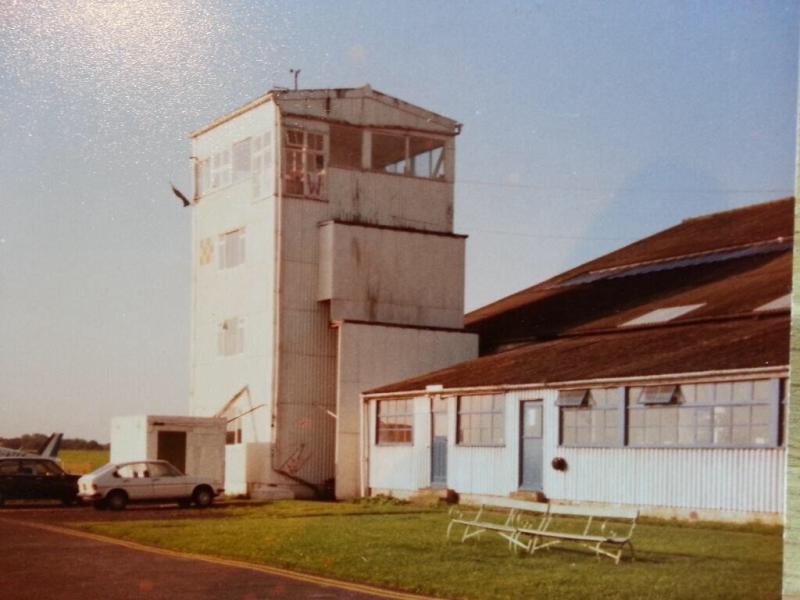
In 1960 Bristow Helicopters took up residence at the aerodrome, built the main office block and developed a major helicopter pilot training school and maintenance base, which saw annual helicopter movements peak at approximately 65,000. Bristow's helicopter training operations continued until 1999 when its operation moved to the USA (California and Florida). In 1986 the old terminal building and control tower was demolished and the buildings you can see now were constructed. The ‘Hangar 9 café’ terrace today is situated on the old tower foundations.
In 1986 the current terminal building and control tower were constructed. In 1991 the then owner of Redhill, British and Commonwealth Ltd was facing liquidation and the aerodrome was acquired by its present owner, Redhill Aerodrome Ventures Ltd.